
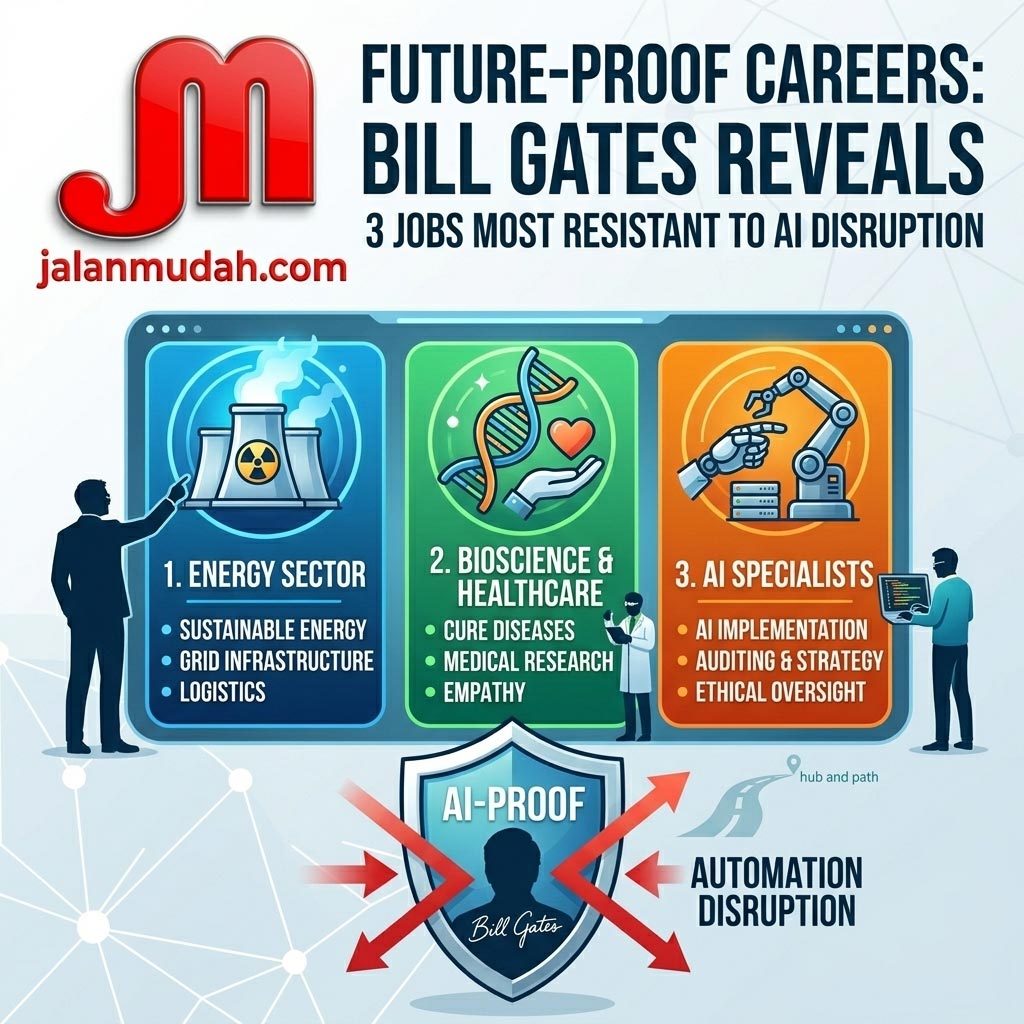
As artificial intelligence continues to reshape industries, professionals around the world are asking an important question: which careers will remain secure in the age of automation? Discussions around future-proof careers have intensified, especially after insights from technology leaders highlighting roles that are less likely to be replaced by AI. These positions emphasize human creativity, complex problem-solving, and emotional intelligence—skills that remain difficult for machines to replicate.
Understanding which jobs are most resistant to AI disruption can help students, professionals, and job seekers prepare for long-term career stability.
Why AI Is Transforming the Job Market
Artificial intelligence is improving efficiency across sectors such as finance, healthcare, customer service, and manufacturing. Automation can handle repetitive tasks, analyze data quickly, and streamline operations. While this brings productivity benefits, it also changes traditional job structures.
However, not all roles are equally affected. Careers that rely heavily on human judgment, creativity, and interpersonal interaction are expected to remain relevant. These positions require skills that go beyond automation and involve real-world adaptability.
The Three Future-Proof Career Paths
Based on widely discussed perspectives, three career categories stand out as highly resistant to AI disruption. These roles combine technical understanding with human-centered capabilities.
1. Technology and AI Specialists
Ironically, one of the safest career paths in the age of AI is working directly with technology. AI systems require skilled professionals to design, maintain, and improve them. Software developers, data scientists, and AI engineers play a crucial role in building intelligent solutions.
Key reasons this career is future-proof:
- Continuous demand for innovation
- Need for human oversight and development
- Rapid evolution of technology requiring expertise
- Strong global job market growth
Professionals in this field also benefit from flexible work opportunities and international demand.
2. Healthcare and Human-Centered Professions
Healthcare roles remain highly resistant to automation because they require empathy, ethical judgment, and direct human interaction. While AI can assist with diagnostics and data analysis, patient care still depends on human professionals.
Examples of resilient healthcare careers:
- Doctors and nurses
- Therapists and counselors
- Medical specialists
- Healthcare support professionals
These roles involve emotional intelligence and complex decision-making, which machines cannot fully replicate. As global populations grow and age, demand for healthcare services continues to increase.
3. Education and Creative Problem-Solving Roles
Educators and creative professionals also represent future-proof careers. Teaching requires adaptability, communication skills, and the ability to inspire learners. Although digital tools support education, human instructors provide guidance and mentorship that technology alone cannot replace.
Similarly, creative problem-solving roles—such as designers, strategists, and innovators—depend on originality and imagination. AI can generate ideas, but humans shape context, purpose, and meaning.
Benefits of these careers include:
- High demand for critical thinking
- Emphasis on creativity and innovation
- Opportunities for lifelong learning
- Flexibility across industries
Skills That Strengthen Career Resilience
Beyond specific job categories, certain skills can help professionals remain competitive. Developing these abilities increases adaptability in a rapidly changing environment.
Essential Future-Proof Skills
- Critical thinking and problem-solving
- Emotional intelligence and communication
- Creativity and innovation
- Digital literacy and technology awareness
- Adaptability and continuous learning
Individuals who combine technical knowledge with soft skills are better prepared for evolving job markets.
How to Prepare for Future-Proof Careers
Preparing for AI-resistant roles involves strategic planning and skill development. Professionals can take practical steps to strengthen their career paths.
Recommended actions include:
- Pursuing education in growing industries
- Learning new digital tools and technologies
- Building strong communication skills
- Gaining hands-on experience through projects
- Staying informed about global trends
These steps help individuals remain relevant regardless of technological changes.
The Global Impact of AI-Resistant Jobs
The conversation around future-proof careers is not limited to one region. Around the world, governments and organizations are encouraging workforce development in resilient sectors. Education systems are adapting to emphasize creativity, critical thinking, and digital competence.
As automation continues to evolve, collaboration between humans and AI will become more common. Rather than replacing workers, technology is expected to enhance productivity and create new opportunities.
Conclusion
Future-proof careers are becoming increasingly important as artificial intelligence transforms the global workforce. Roles in technology, healthcare, and education stand out as the most resistant to AI disruption. These professions rely on uniquely human abilities such as creativity, empathy, and complex decision-making.
By focusing on skill development and adaptability, individuals can prepare for long-term career stability. As AI continues to evolve, combining human strengths with technological knowledge will be the key to success in the future job market.